
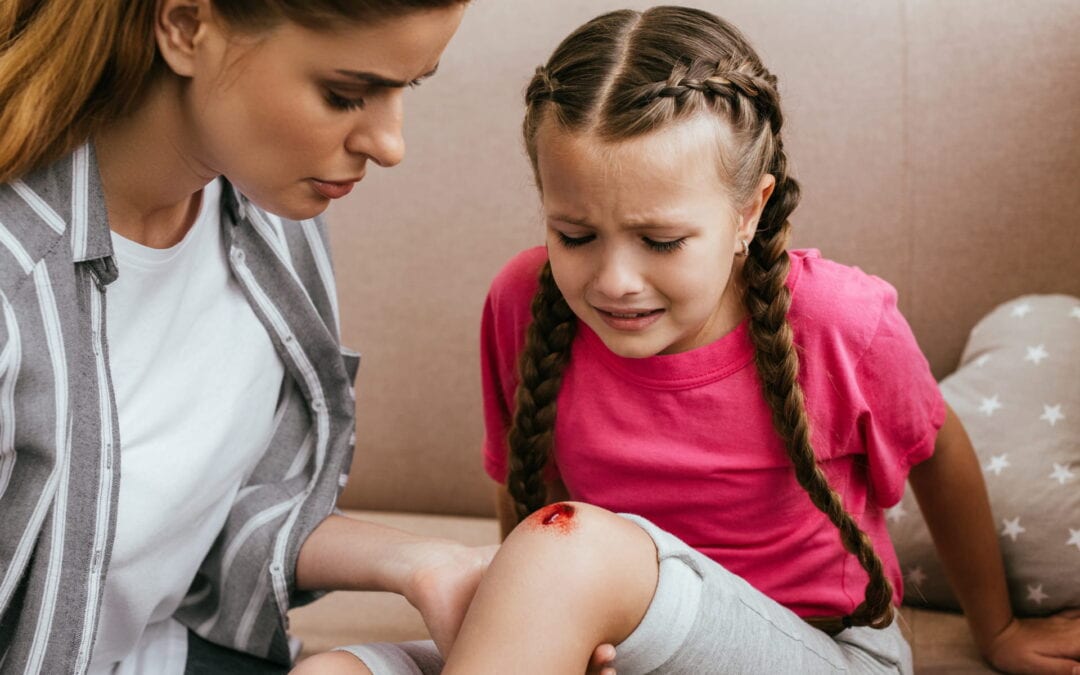
Playgrounds offer children space to climb, swing, slide, and explore, but active play can also lead to scrapes, cuts, falls, and lacerations. Most playground injuries are minor, yet some wounds need professional medical attention when bleeding is difficult to control, the cut is deep, or the injury involves the face, scalp, hands, or a dirty surface. Pediatric urgent care can help evaluate playground cuts that may need stitches, wound cleaning, or follow-up care. The American Academy of Pediatrics notes that emergency departments treat more than 200,000 children for playground-related injuries each year, which makes playground injuries an important safety concern for families.
Common Playground Injuries
Playground fun can sometimes be interrupted by cuts, bruises, sprains, fractures, and head bumps. Lacerations are especially important because they may require cleaning, closure, or infection prevention. Parents should watch the depth of the wound, the amount of bleeding, and whether dirt, metal, glass, or wood may be inside the cut. The CDC reported that lacerations made up 38.5% of playground equipment-related injuries among preschool and elementary school-aged children in one surveillance review, which shows why playground lacerations should be taken seriously.
Cuts and Scrapes
Cuts and scrapes are common during childhood play, but not every wound needs stitches. A shallow scrape can often be cleaned and covered at home, while a deeper cut may need medical care if the edges separate, bleeding continues, or debris is stuck in the wound. Cuts caused by sharp metal, rusty equipment, splintered wood, or dirty surfaces may also raise concerns about infection or tetanus protection. MedlinePlus explains that a large cut may need prompt medical attention and may require stitches or staples to close the wound, which makes cuts that need stitches important for parents to recognize.
Falls Leading to Lacerations
Falls from slides, climbing structures, monkey bars, and other playground equipment can cause lacerations when a child lands against a hard edge, rough surface, or nearby object. These wounds may bleed heavily, especially when they occur on the face or scalp. Soft landing surfaces can help reduce the force of falls and may lower the risk of more serious injuries. The American Academy of Pediatrics explains that most playground injuries happen when a child falls from equipment onto the ground, which is why playground fall protection matters.
Head Injuries
Head injuries need careful attention because scalp cuts can bleed a lot, and a hard hit may also cause concussion symptoms. Parents should watch for vomiting, confusion, severe headache, unusual sleepiness, dizziness, behavior changes, or loss of consciousness after a playground fall. A head wound may need stitches if the cut is deep, gaping, or continues bleeding after steady pressure. The CDC explains that concussion symptoms can affect how a child feels, thinks, sleeps, and acts, which makes head injuries in children important to evaluate after a significant impact.
Broken Bones
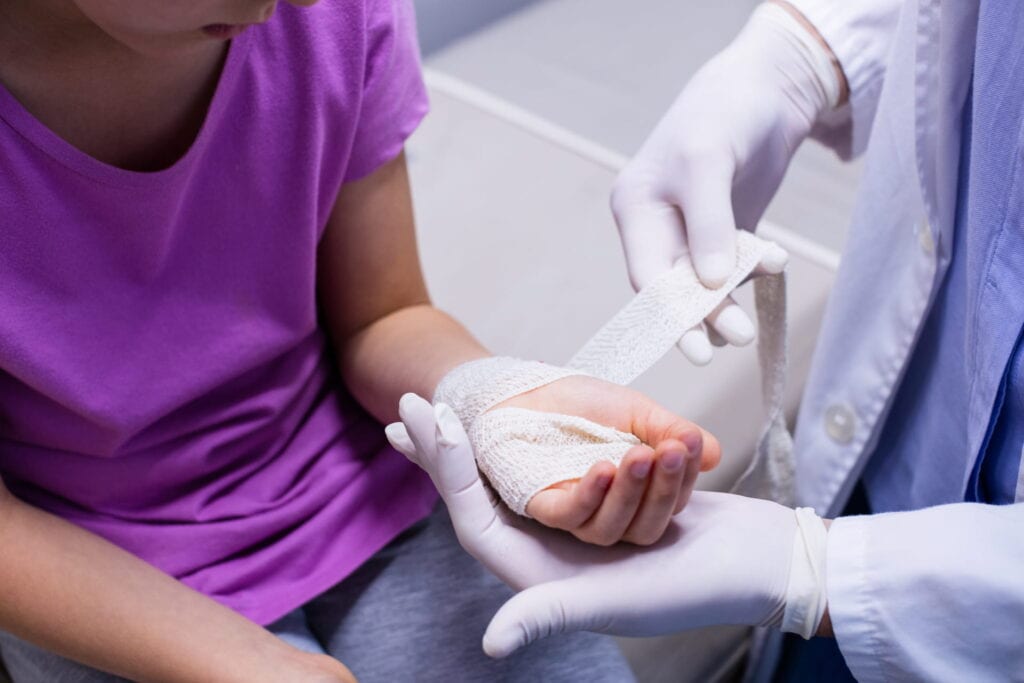
Though not all fractures require stitches, some complex breaks might necessitate surgical intervention to realign the bone, followed by stitches to close the incision. Recognizing the signs of a fracture, such as unnatural angles, swelling, and inability to move the affected limb, is vital for timely treatment.
Prevention Tips
Preventing playground injuries starts with supervision and teaching children safe play practices. Encouraging the use of age-appropriate playground equipment and inspecting the play area for hazards can significantly reduce the risk of injuries.
First Aid Measures
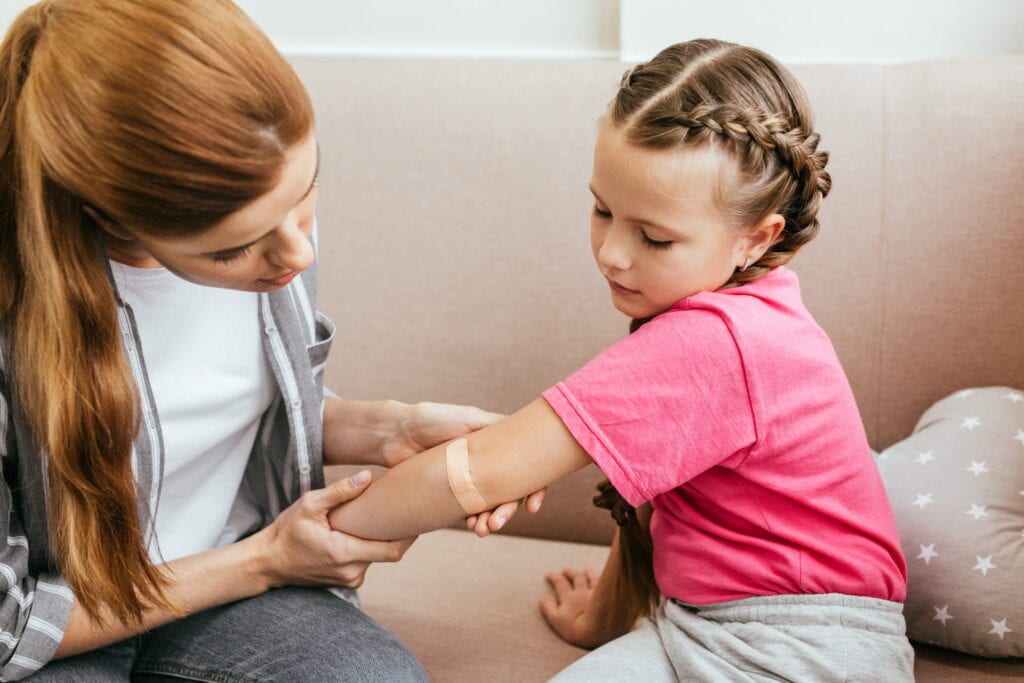
For minor cuts and scrapes, cleaning the wound with soap and water followed by applying an antibiotic ointment and a clean bandage is often sufficient. However, for deeper wounds, applying pressure to stop the bleeding and covering the wound with a clean cloth or bandage while seeking medical attention is necessary.
When to Seek Medical Attention
Seeking medical attention is warranted if the wound is deep, won’t stop bleeding, or was caused by a dirty or rusty object. Signs of infection, such as redness, swelling, warmth, or pus, also necessitate a visit to the doctor.
Healing and Aftercare
The healing process for stitches varies, but keeping the wound clean and dry is paramount. Following the healthcare provider’s instructions for wound care and monitoring for signs of infection will ensure a smooth recovery.
Prompt and appropriate response to playground injuries can mitigate the severity of the outcomes. Research published in the Journal of Pediatric Health Care emphasizes the importance of parental knowledge in first aid and injury prevention to reduce the incidence and severity of playground injuries. Journal of Pediatric Health Care
Key Takeaways for Parents on Playground Safety and Injury Care
- Supervision and teaching safe play practices are crucial in preventing playground injuries.
- Knowing how to administer first aid for cuts and when to seek medical attention can make a significant difference in the outcome.
- The healing process for stitches requires diligent care, including keeping the wound clean and monitoring for signs of infection.
Frequently Asked Questions
1. How can I tell if a cut needs stitches? If a cut is deeper than ¼ inch, won’t stop bleeding after 10 minutes of direct pressure, or has jagged edges, it likely needs stitches.
2. Can small cuts become infected? Yes, even small cuts can become infected if not properly cleaned and cared for. Signs of infection include redness, swelling, warmth, and pus.
3. How long do stitches stay in? The duration stitches need to stay in varies depending on the location and severity of the wound but typically ranges from 5 to 14 days.
4. Should I let my child play on wet playground equipment? Wet playground equipment can increase the risk of slips and falls. It’s best to wait until the equipment is dry before allowing play.
5. How can I minimize scarring from stitches? Keeping the wound clean, avoiding sun exposure, and following your healthcare provider’s instructions for wound care can help minimize scarring.